Iowa Pearl Harbor vets recount day in new film
Posted
by Pat Kinney
on Friday, January 23, 2026
“Dec. 7, 1941, I thought the world was coming to the end when the ship rolled over and I couldn’t get out.” —Paul Aschbrenner, Sumner, USS Oklahoma, Pearl Harbor
WATERLOO — Blackened burned flesh, sailors groping for escape from a ship rolling over and shipmates who guided their way to life at the loss of their own.
Such was the horror, heartbreak and heroism at Pearl Harbor - described by those who lived to tell the tale, surviving the day of infamy that sucked American into the maelstrom that was World War II.
Some of those survivors told their stories to Waterloo’s Grout Museum District and its Sullivan Brothers Iowa Veterans Museum years ago. They’re all gone now, but their stories are preserved in the museum’s video archives.
“I wish they were all still alive so I could shake their hands and salute or something,” said Benjamin Miller, director of education at the Grout Museum District.
Miller has taken those eyewitness accounts and images of that day of peril and tragedy and brought them to life in a new documentary, produced by museum staff and premiering at the end of this month.
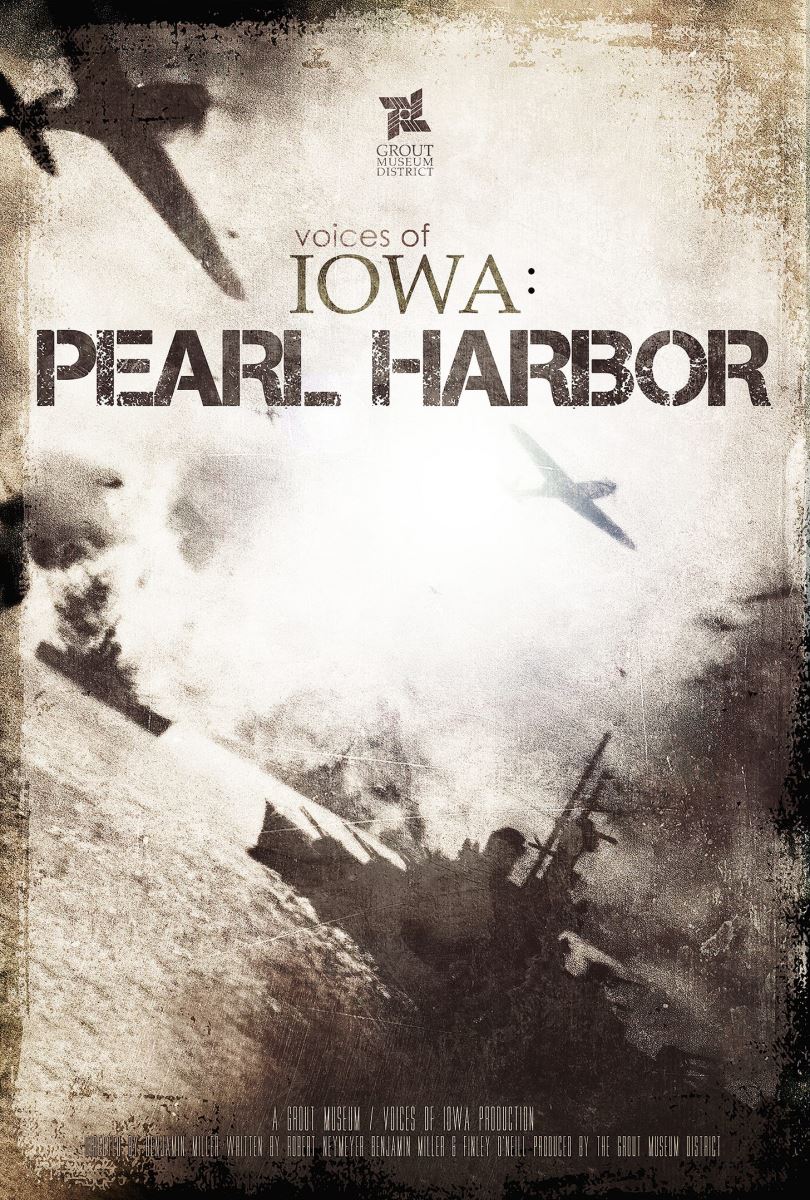
“Voices of Iowa: Pearl Harbor,” a production by Miller which he co-wrote with state-renowned Grout historian Dr. Robert Neymeyer and intern Finley O’Neil, is scheduled to premiere to the general public at a series of screenings Saturday, Jan. 31 at 1 p.m., 3 p.m., and 4:30 p.m. in the museum theater. Admission is $5, with the 1 p.m. showing free to veterans and active-duty personnel. Two special screenings for museum members will be Jan. 30. More information may be obtained at the link here.
The documentary features stories by eight Pearl Harbor survivors from Iowa.
“I have such profound respect for every single one of these individuals,” Miller said.
It is the second of a series of documentaries the Grout is producing from its “Voices of Iowa” oral history archive. The first in the series, “Voices of Iowa: D-Day,” debuted last year.
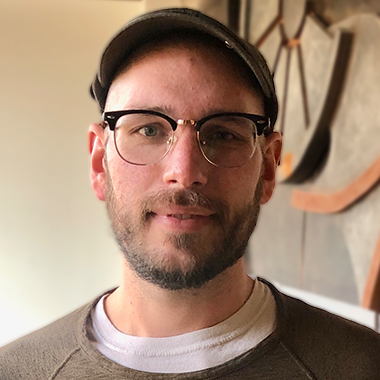
Benjamin Miller, Education Director
.jpg)
Bob Neymeyer, Historian
The Grout Museum District’s “Voices of Iowa” archive consists of more than 2,300 oral history interviews, compiled since 2001 under the initiative of Grout historian Neymeyer and now-retired longtime GMD executive director Billie Bailey. Neymeyer holds a doctorate in history from the University of Iowa and is the recipient of the State Historical Society of Iowa’s Lifetime Achievement award.
“The story of the Japanese attack on Pearl Harbor in 1941 is in need of renewal,” Neymeyer said. “Revision historians and Hollywood producers have removed much of the human and emotional content. Today we need to return to the real words and accounts to better understand what happened on that quiet Sunday when the world exploded in Hawaii. It gives us all a better understanding and appreciation of why Pearl Harbor veterans, and their generation, are so passionate about their contributions. We should recognize their service and sacrifice.”
The objective of “Voices of Iowa” is to obtain first-person accounts of those who participated in or were witnesses to history and preserve them for future generations. Doing so on video, with those participants and witnesses as storytellers, captures not only the facts, but the emotional impact those events had on those who were there, for posterity.
That’s right up Miller’s alley. who has a filmmaking background, which Neymeyer cultivated.
“My unique angle with documentaries is, I play on the emotions,” Miller said. “It’s not your typical educational institution documentary. Music is a big part of my process. I used that to make an emotional impact.” He has a music studio and did the musical score for the entire documentary.
Throughout the filmmaking process, Miller said, “I keep trying to find Iowa connections —” to take “this incredible event that changed our world history and figure out how Iowa had an impact, that Iowans can relate to.”
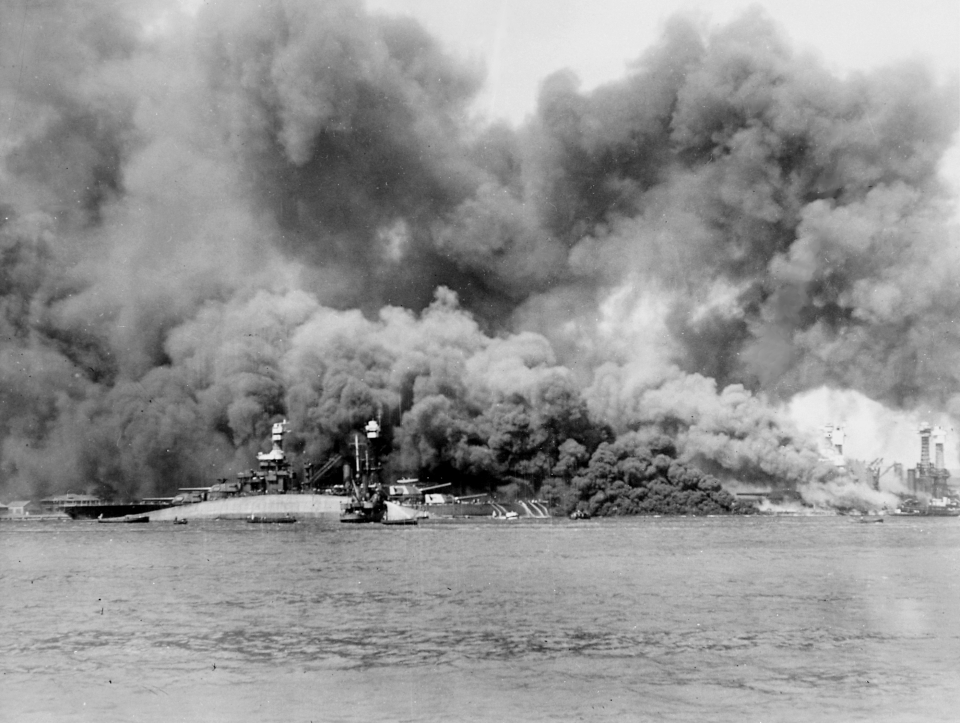
"Battleship Row" after the Japanese attack on Pearl Harbor on Dec. 7, 1941. The capsized USS Oklahoma (hull number BB-37) is visible the foreground, behind her is USS Maryland (BB-46), USS West Virginia (BB-48) burns furiously on the right. (U.S. Navy/National Archives and Records Administration)
The project, like the D-Day documentary, was an emotional one for Miller.
“When you’re sitting through these interviews, some of the things they talk about can be very difficult to hear,“ he said. “There’s parts where I just had to pause it and walk away for a bit, collect myself and get back to it.
“It’s awe inspiring to see not only what they went through, but how the mindsets of people have shifted from then to today,” Miller said. “The attitude was, “Well, we just did it because we had to do it.’ And just kept going, going on with their duties.”
A Dike-New Hartford High School graduate, Miller studied filmmaking at Trinity Christian College near Chicago. He had done videos for the museum district’s Norris Corson Family Planetarium.
Neymeyer, a former longtime history instructor at the University of Northern Iowa, had done an award-winning 2014 documentary on Waterloo’s Jewish community and Sons of Jacob Synagogue with UNI communication studies professor Francesca Soans.
Neymeyer suggested Miller turn his talents toward history. “We worked together to develop the D-Day show,” Miller said. “Based on the success of that, we decided to do an annual thing. Because have plenty of content in our archives.
“Bob definitely gave us a platform,” Miller said. “Our very first meeting, he came with this map and notes and vision for the project.”
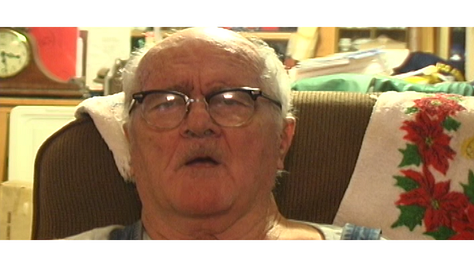
Pearl Harbor survivors: Ed Welter, USS Arizona
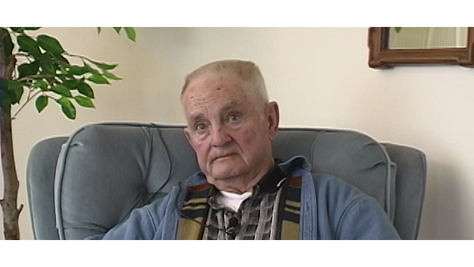
Paul Aschbrenner, USS Oklahoma
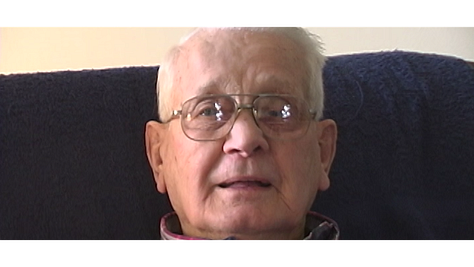
Alfred Frahm, USS Honolulu
Featured in the Pearl Harbor documentary are interviews with the following survivors:
—Alfred Frahm of Evansdale.
—Ed Welter of Waterloo.
—Hollis Havens of Steamboat Rock.
—Jean Knapp of Waterloo.
—Paul Aschbrenner, native of Sumner.
—Richard Clark of Louisa County.
—Charles Stutesman of Webster City.
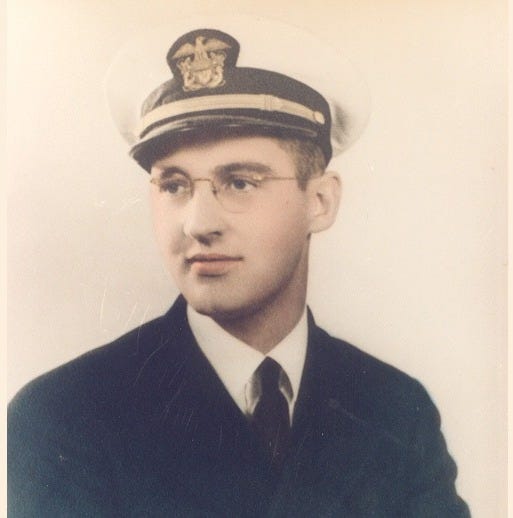
Father Aloysius Schmitt (U.S. Navy photo)
Also featured in the documentary will be the Rev Aloysius Schmitt of St. Lucas in Fayette County, the first U.S. military chaplain to die in World War II.
Schmitt, a Roman Catholic priest and lieutenant junior grade, was a chaplain on the battleship USS Oklahoma. He is credited saving 12 shipmates’ lives by guiding them through the capsized ship to safety, sacrificing his own. He was posthumously awarded the Silver Star. His remains were identified in 2016 and returned to Iowa for burial. A funeral was held at Christ the King Chapel at Loras College in Dubuque.
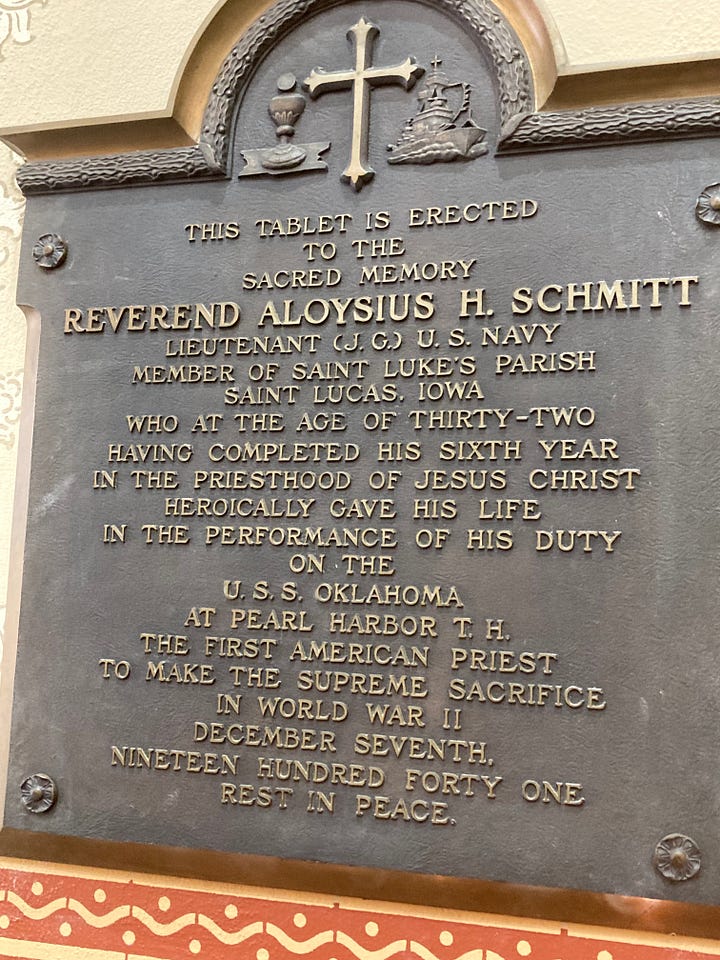
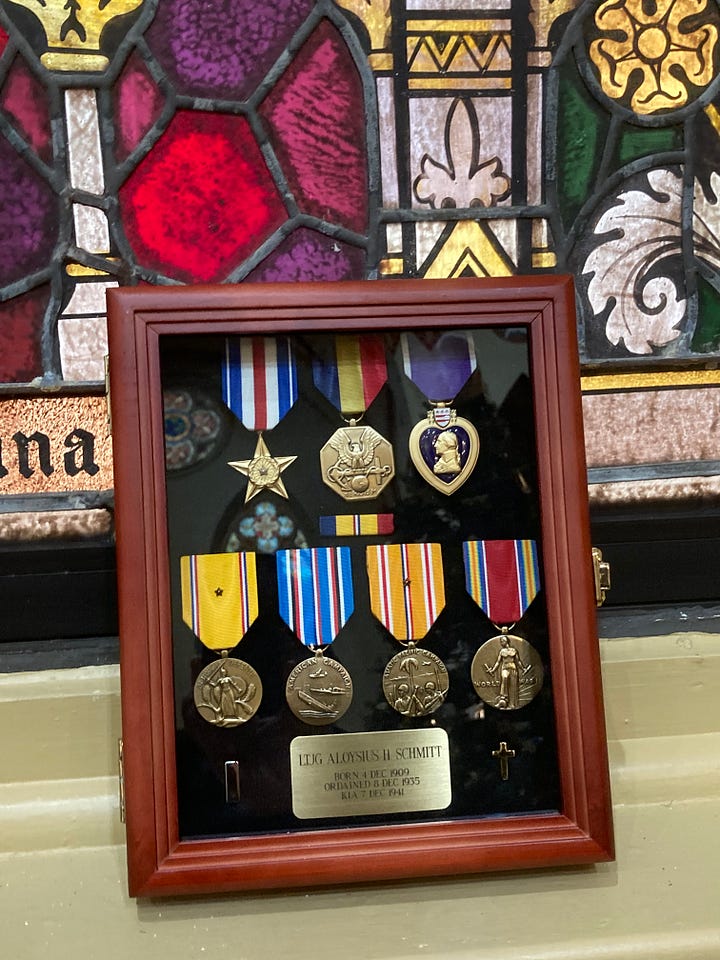
A memorial plaque to Father Aloysius Schmitt and his military decorations are on display at his home church, St. Luke Catholic Church in St. Lucas in Fayette County, (Pat Kinney photos)
“I want as many people to see this as possible,” Miller said, “to realize the connection Iowa has with this event, especially leading up to the 85th anniversary of Pearl Harbor” this coming December.
”There is nothing quite like hearing history directly from those who experienced it,” Grout Museum District executive director Margaret Moye said. “Through these personal accounts, history becomes human — connected to a face, a voice, and a lived experience. We are excited to now bring these stories to a broader public. I invite everyone to watch, listen, and connect with the voices who helped shape Iowa’s story.”
More documentaries are planned. “Moving forward, Voices of Iowa Productions will release a new film annually, each focused on a different historical theme drawn from this remarkable archive,” Moye said.
“We have the next two or three years planned out,” Miller said. “My end goal of this is I hope people will be able to go to a veteran and appreciate them more, shake their hands.”
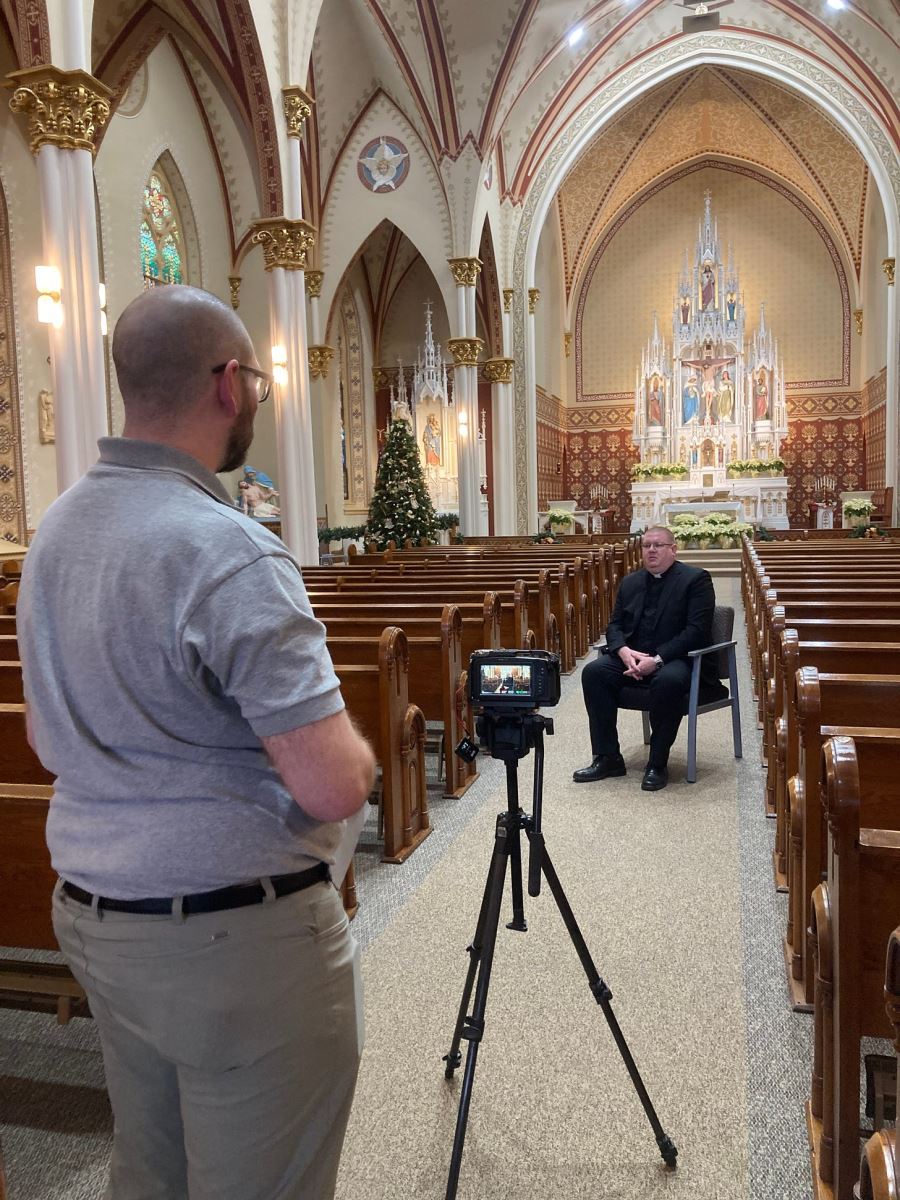
Grout Museum District education director and documentarian Benjamin Miller conducts and video records an interview with the Rev. Nicholas Radloff, a U.S. Air Force Iraq and Afghanistan veteran, at St. Luke Catholic Church in St. Lucas, the home church of the Rev. Aloysius Schmitt, the first American military chaplain to die in World War II, in the attack on Pearl Harbor on Dec. 7, 1941. Radloff is pastor at St. Luke and a cluster of other churches in nearby communities. (Pat Kinney photo)