Late Iowa sailors saved Vietnam refugees in '54
Posted
by Pat Kinney
on Wednesday, August 12, 2026
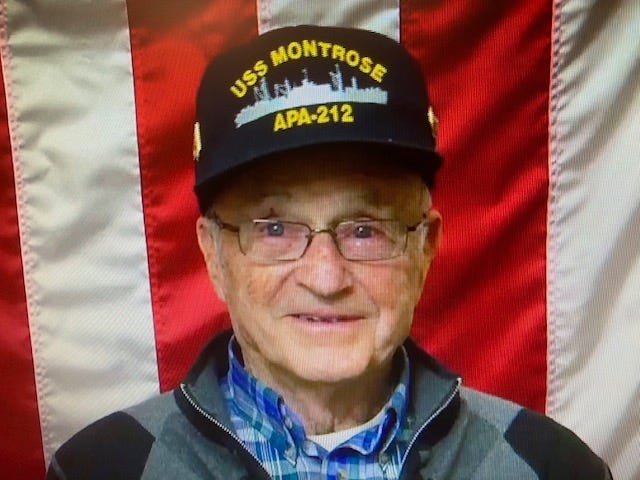
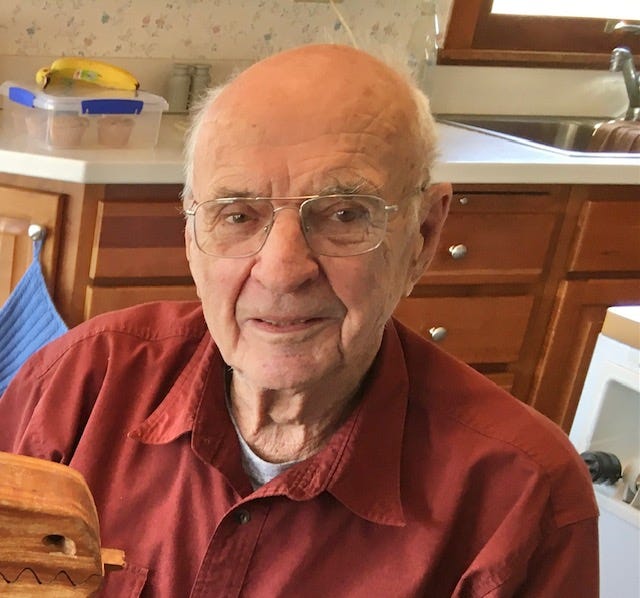
Eddie Cahill/Jack Neuzil (Grout Museum District/Pat Kinney)
WATERLOO — The two old sailors' last watch is now over.
But neither of them forgot the anguished faces of people filled with fear and despair they aided as young men 70 years earlier.
It’s a memory each has recorded and shared for posterity.
Two Iowa sailors who helped evacuate hundreds of thousands of refugees from communist forces in Vietnam in the early 1950s have now passed on.
John Edward “Eddie” Cahill, 94, of Waterloo, died June 30. His obituary is linked here.
Jack Neuzil of Solon also was 94 when he passed away in April 2025. His obituary is linked here.
They were two sailors on two different ships, with one mission: Operation Passage to Freedom. They evacuated refugees fleeing what is now North Vietnam after Viet Minh forces broke a siege at the French colonial stronghold at Dien Bien Phu in 1954.
I interviewed Cahill and Neuzil in 2018 and 2021, respectively, as part of the Grout Museum District’s “Voices of Iowa” video-recorded oral history program for Waterloo’s Sullivan Brothers Iowa Veterans Museum.
Cahill said the frightened refugees were told the Americans would just throw them overboard into the sea.
He and comrades showed them differently. “Just by being a good person,” Cahill said — after the evacuees had lived through days and weeks of hell.
Cahill, an enlistee born in Rockwell, served on the attack transport ship USS Montrose, hull number APA 212. Neuzil, born in Iowa City, entered Navy officer candidate school after graduating from Northern Illinois University. Commissioned as an ensign, he served on the landing ship USS Tom Green County, LST 1159.
Both ships were built to haul troops and equipment into battle. They were used in Operation Passage to Freedom to save people from disaster and death.
“They only had so many days if they wanted to leave the North to go to the South,” Neuzil said of the refugees. “They were mostly Catholic. They spoke French because it was a French country (possession), it was a Catholic country and most of the Catholics were the ones who wanted to leave…They had been punishing them up there.”
Neuzil and Cahill were Catholic too. Catholic missionary and indigenous priests were among the refugees, Neuzil said, as their churches were being destroyed.
“It was just so sad,” Neuzil said. “They just tortured them, that’s why they wanted to leave,” with whatever possessions they could.
Cahill’s ship had served in the Korean War a few months prior to being sent to Vietnam. Neuzil’s ship, newly commissioned at the end of the war, was enroute to Japan and Korea from Pearl Harbor, Hawaii when it was diverted for the massive humanitarian effort.
“It was civilians. These were common farm people,” Neuzil added. “We hauled one load of civilians —- they were like 2,000 of them — and they just stood in there like cordwood. It was in the tank deck, where we’d normally held tanks and stuff like that. They just laid down there. They didn’t know anything about our toilet systems and you can imagine what that was like. It was pretty raunchy.” Sailors would clean the area with a fire hose.
Despite the conditions, “They were just so glad to get on there,” Neuzil said. He noted that the young refugee kids would give the sailors a thumbs-up sign and yell “OK! OK!” when they passed by on rounds.
“That was good to hear,” Neuzil said.
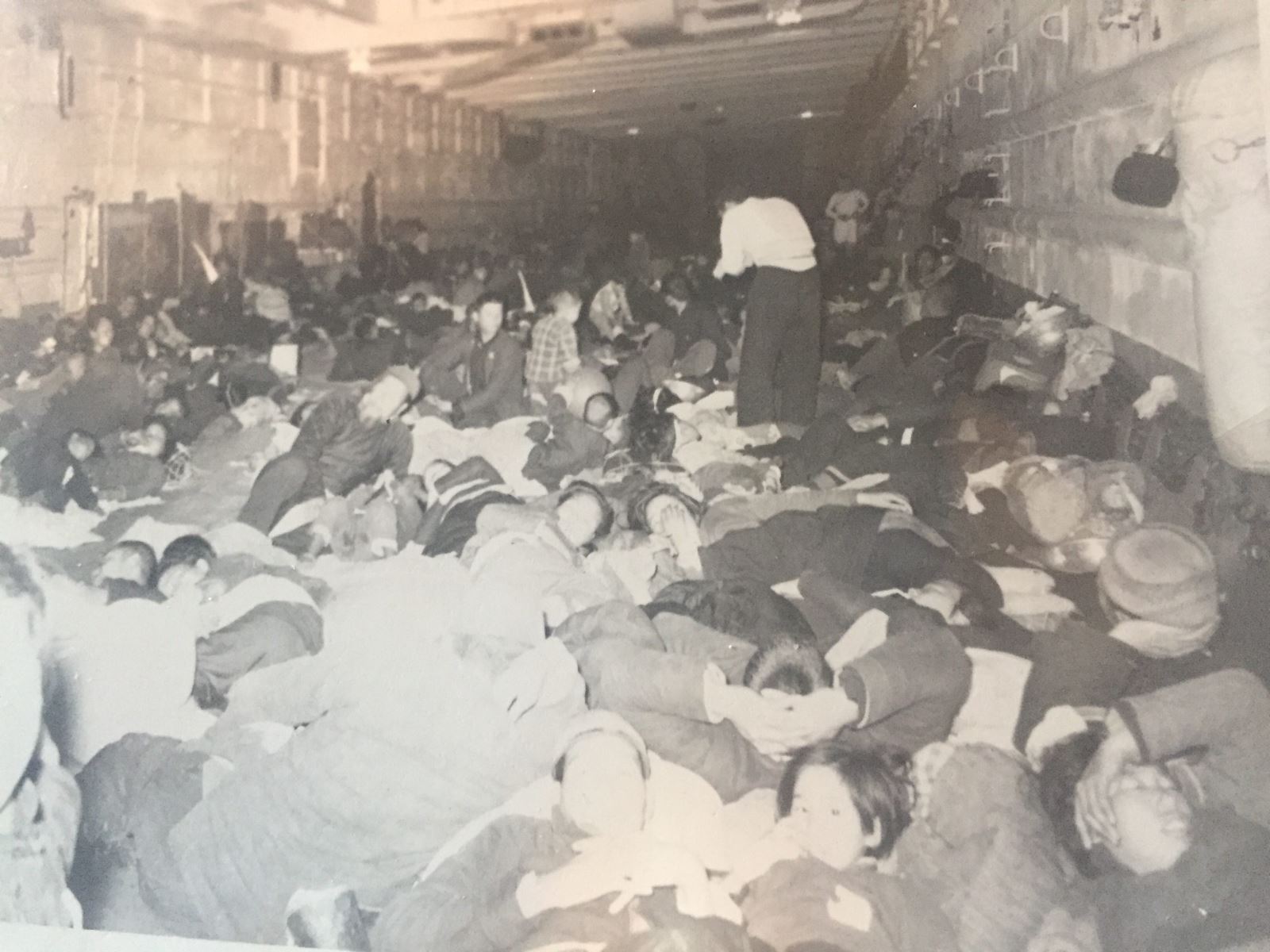
Vietnamese refugees filled the cargo hold inisde Jack Neuzil;s ship, the USS Tom Green County LST 1159, during Operation Passage to Freedom in 1954 (Jack Neuzil photo)
The Americans evacuated French nationals and troops, but mostly Vietnamese civilian refugees, from the victorious Viet Minh, led by communist leader Ho Chi Minh. It was at the end of the French-Indochina War, also known as the First Indochina War, which lasted from 1946-54. The Viet Minh resisted France trying to retake the region after Japanese occupation during World War II.
Portions of what was known as French Indochina were partitioned into North and South Vietnam under terms of a 1954 armistice agreement. Evacuees were transported from the North Vietnamese port of Haiphong to Saigon in South Vietnam. Neuzil’s ship also transported evacuees, including French Foreign Legion soldiers, to Da Nang, in South Vietnam but just 85 miles south of the 17th parallel demarcation line dividing the two countries
“We didn’t even know what ‘French Indochina’ was,” Neuzil said.
Cahill and his shipmates had just come out of a combat zone not long before, along the coast of Korea.
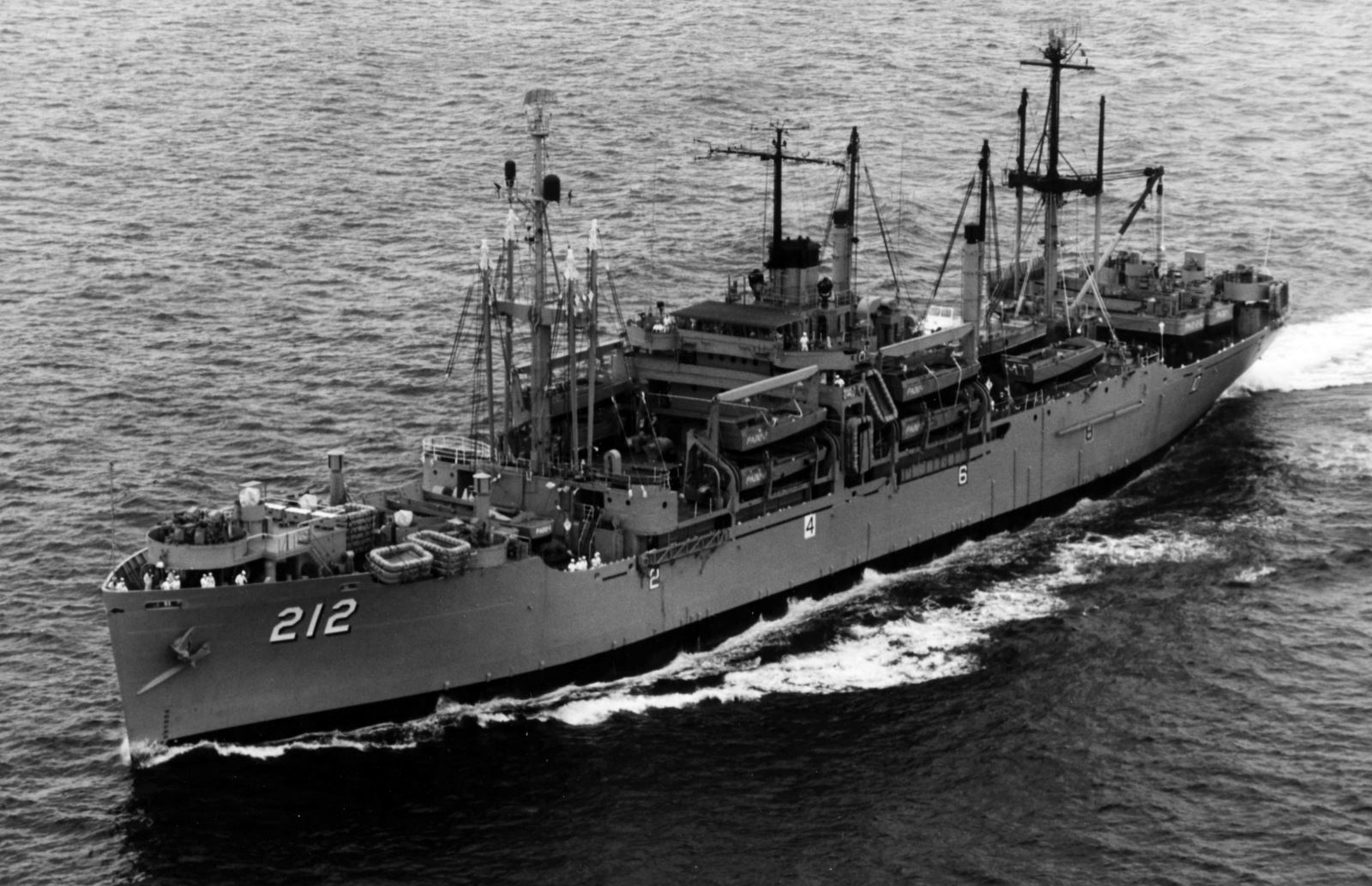
Above: USS Montrose. Below, USS Tom Green County (U.S. Navy/Jack Neuzil photos)
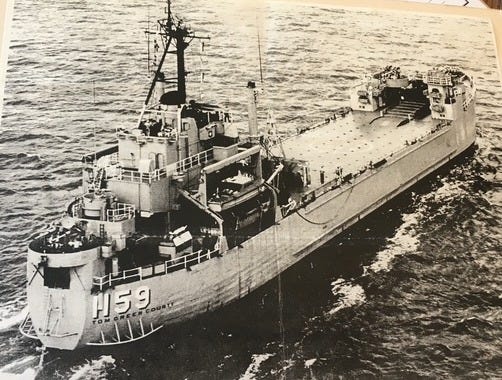
After training in San Diego, Cahill was assigned immediately to the Montrose. He helped transport equipment and troops along the Korean coast through most of 1952-53. Other ships in the area included Cahill’s home state’s namesake battleship, the USS Iowa (BB-61), known as “The Gray Ghost of the Korean Coast.” U.S. and United Nations forces blockaded Wonsan Harbor in North Korea most of the war.
Once an armistice ending the fighting was signed in July 1953, the Montrose hauled thousands of troops out of Korea from the Pusan area of the peninsula on the first leg of their journey home.
Just a few months later the Montrose and other ships in a task force joined Operation Passage to Freedom. Its duty shifted from a combat to a rescue operation — transporting non-communist refugees from Haiphong to Saigon.
“That was the last place they could go, into Saigon, to stay ahead of the communists. That’s who they were running from,” Cahill said. “If they didn’t, they said they’d be dead.”
Cahill, lIke Neuzil, said he didn’t even know where Vietnam or French Indochina was at the time, until he looked it up on a map.
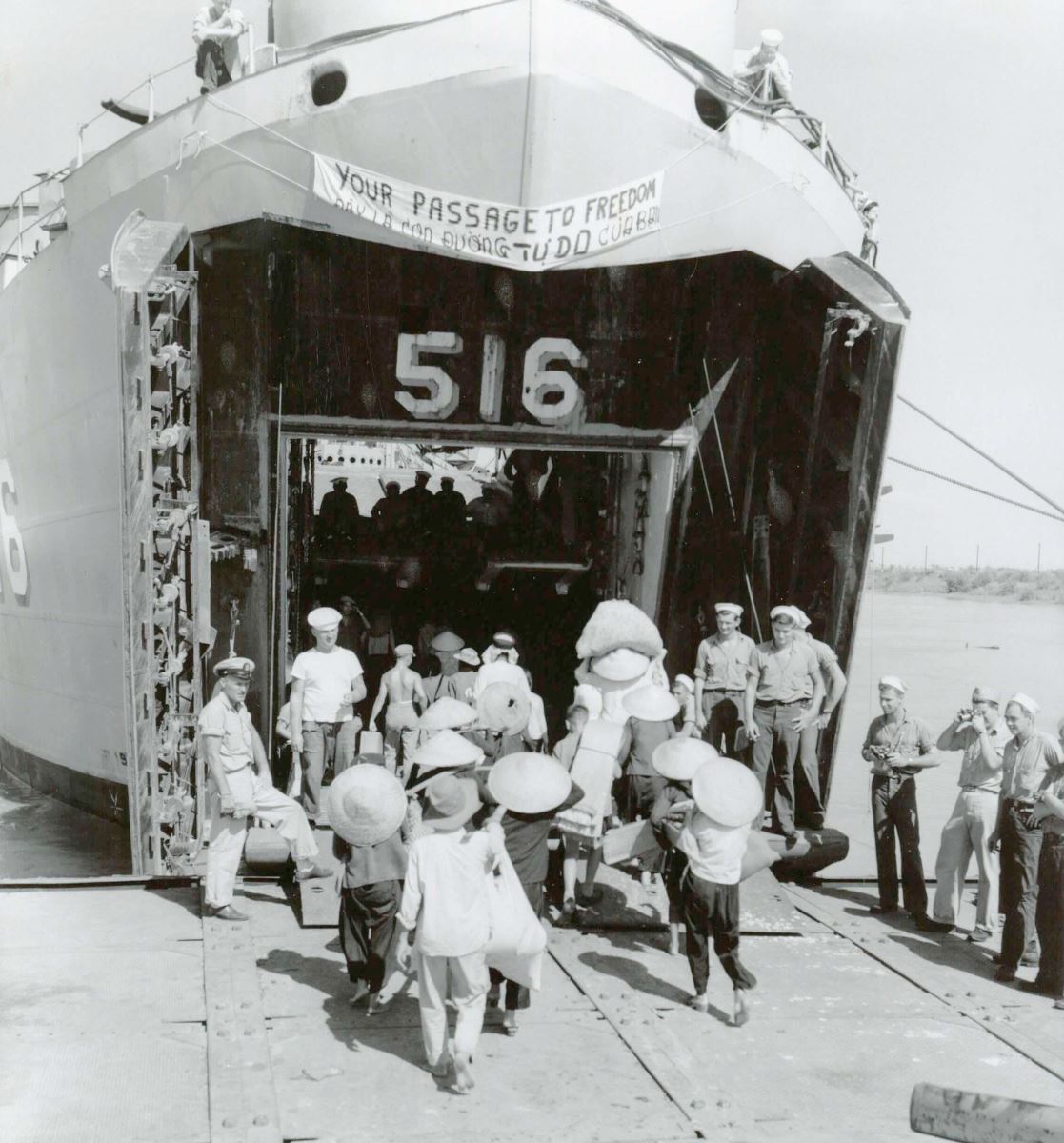
Vietnamese refugees boarding the Navy landing ship USS Calavaras County during Operation Passage to Freedom in Vietnam in 1954 (U.S. Navy photo)
The Montrose could hold up to 900 people at a time and were boarding panicked people who were literally carrying their lives on their backs out of fetid conditions, many suffering from disease and health issues.
“Every one of them had to be sprayed with (insecticide) DDT” before they boarded ship, Cahill said. “Because they had lice; they had everything.
“We never went down into the living quarters where we put them,” he said. “It got so putrid…They didn’t know what a latrine was.”
It was men, women and children. “They just were lost. They didn’t have any idea what was going on. And they were all scared,” Cahill said. “They were scared of us. They were scared of everything. Because they didn’t know where they were going, what was going to take place. It was sad…. they just had a little bag for clothes; didn’t have any idea what they were gonna do for food…. They were petrified, really.
“They were positive we were going to go out to sea and we’d dump them” Cahill said. They found out that was not the case — quite the opposite, as seen in the Navy photos below on Cahill’s ship.
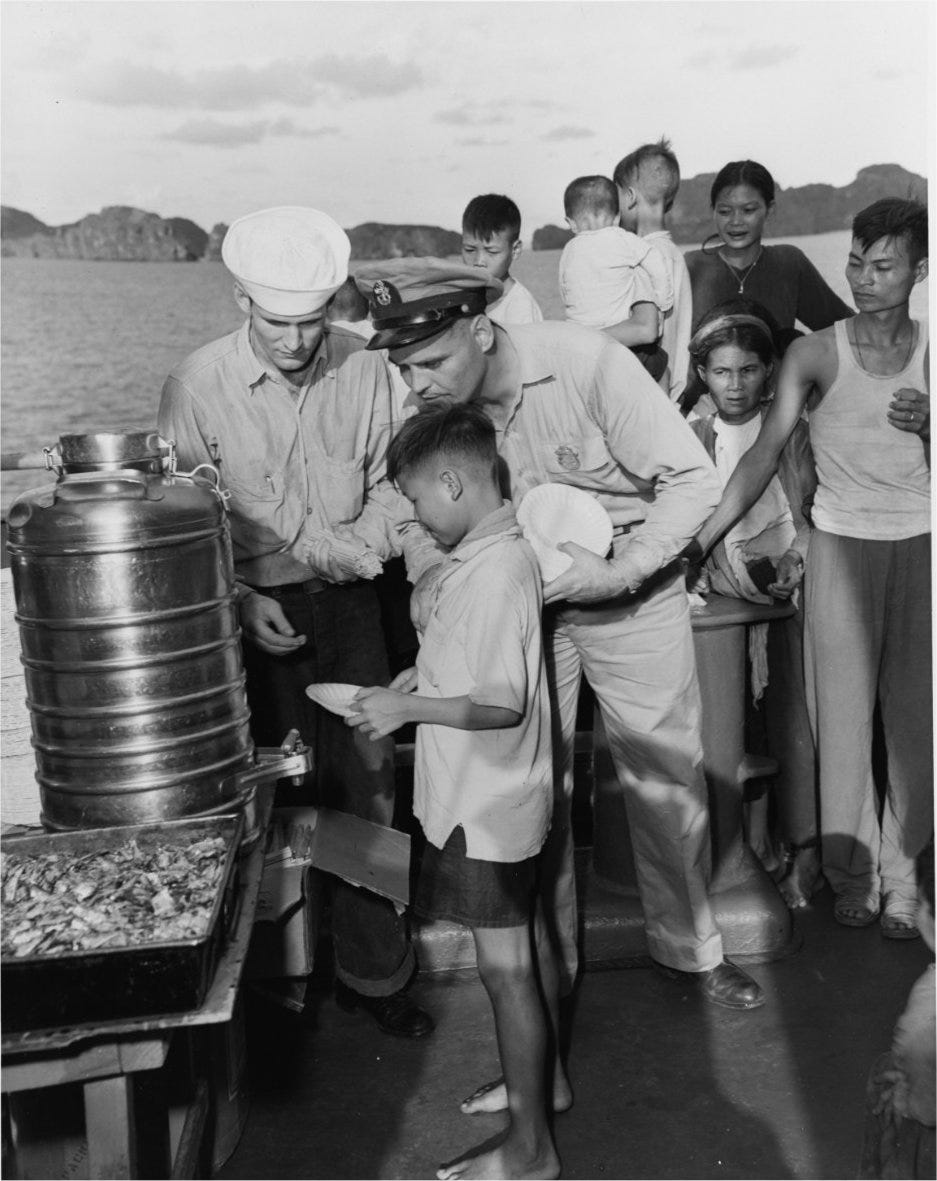
During Operation Passage to Freedom Vietnamese refugees aboard USS Montrose (APA-212) are shown the way of the U.S. Navy chow line while en route to Saigon from Haiphong, North Vietnam on Aug. 18, 1954. (U.S. National Archives/U.S. Navy photos)
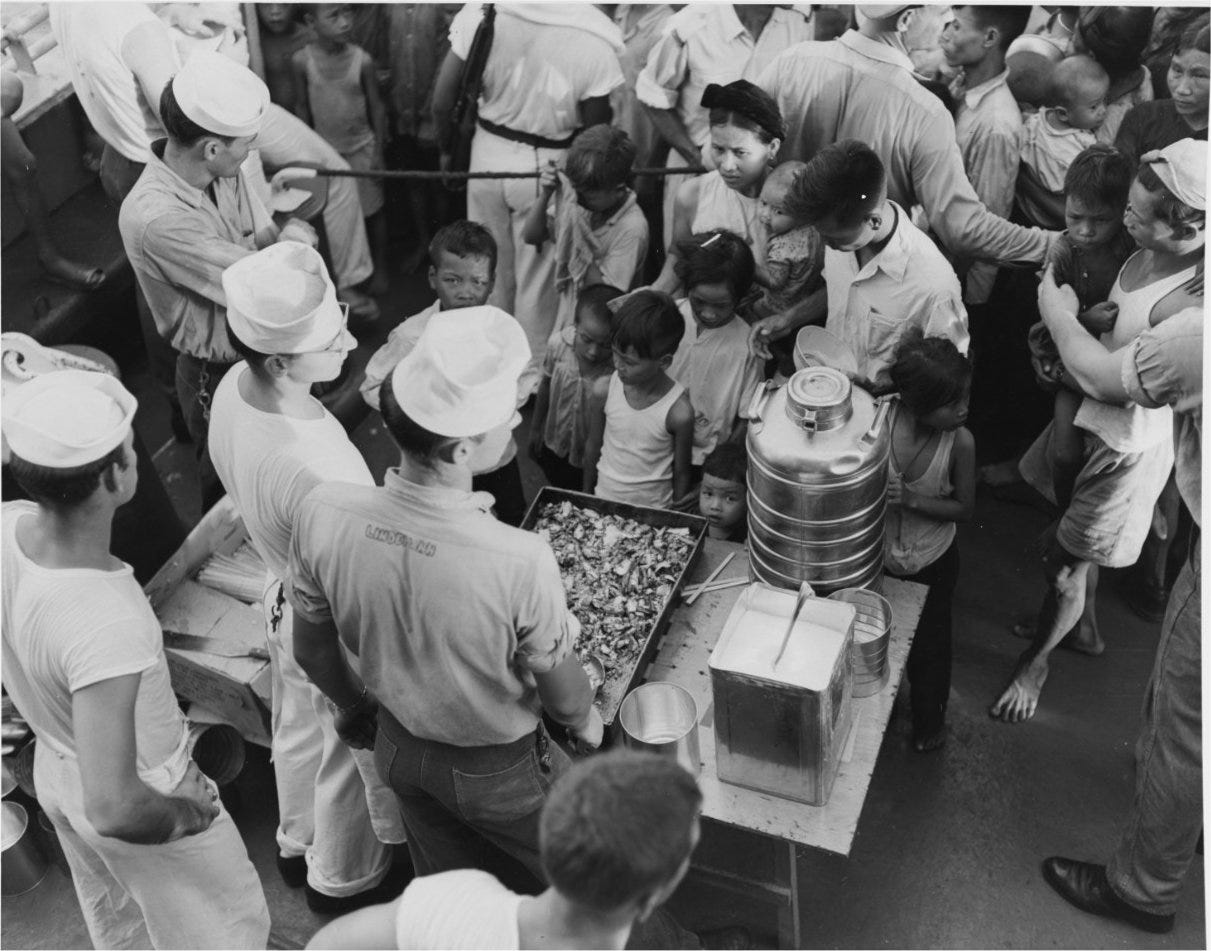
“After they got used to us Americans, they came up and they would visit with us, and try to do things together, ” and make the situation easier, Cahill said. “Everybody on board was really good to them. They worked right with them, played with them and did everything they could to make it as good as you could possibly get it.”
Like Neuzil, Cahill noted many of the evacuees were fellow Catholics. Though there was a language barrier, Cahill spotted rosaries and other familiar religious items among refugees’ belongings.
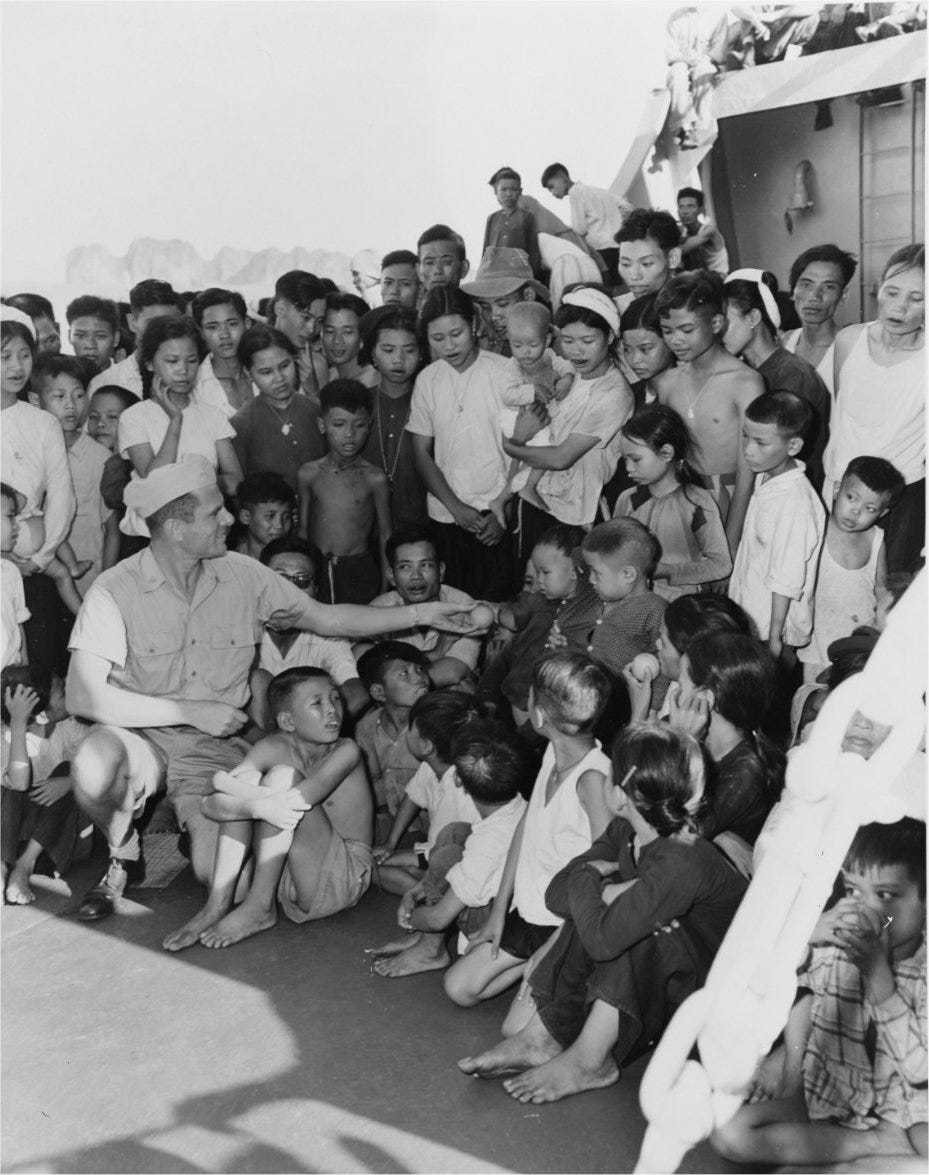
US. Navy Lt. Commander H.B. Somerville, hands an orange to a Vietnamese child refugee as they are en route from Haiphong to Saigon, South Vietnam aboard USS Montrose (APA-212) during Operation Passport to Freedom in August 1954. (U.S. Navy photo)
Neuzil’s ship brought the last load of refugees out.
“We got in on the last trip” out of Haiphong, Neuzil said. “We were up there and the next day the country divided and it became North and South Vietnam. We got out of there just in time.”
When they arrived in Saigon, they were welcomed by boys and young men in small boats. “The kids would come out in these boats and beg. The sailors would throw them candy bars or coins. They’d rub their stomach and hold their hands out.”
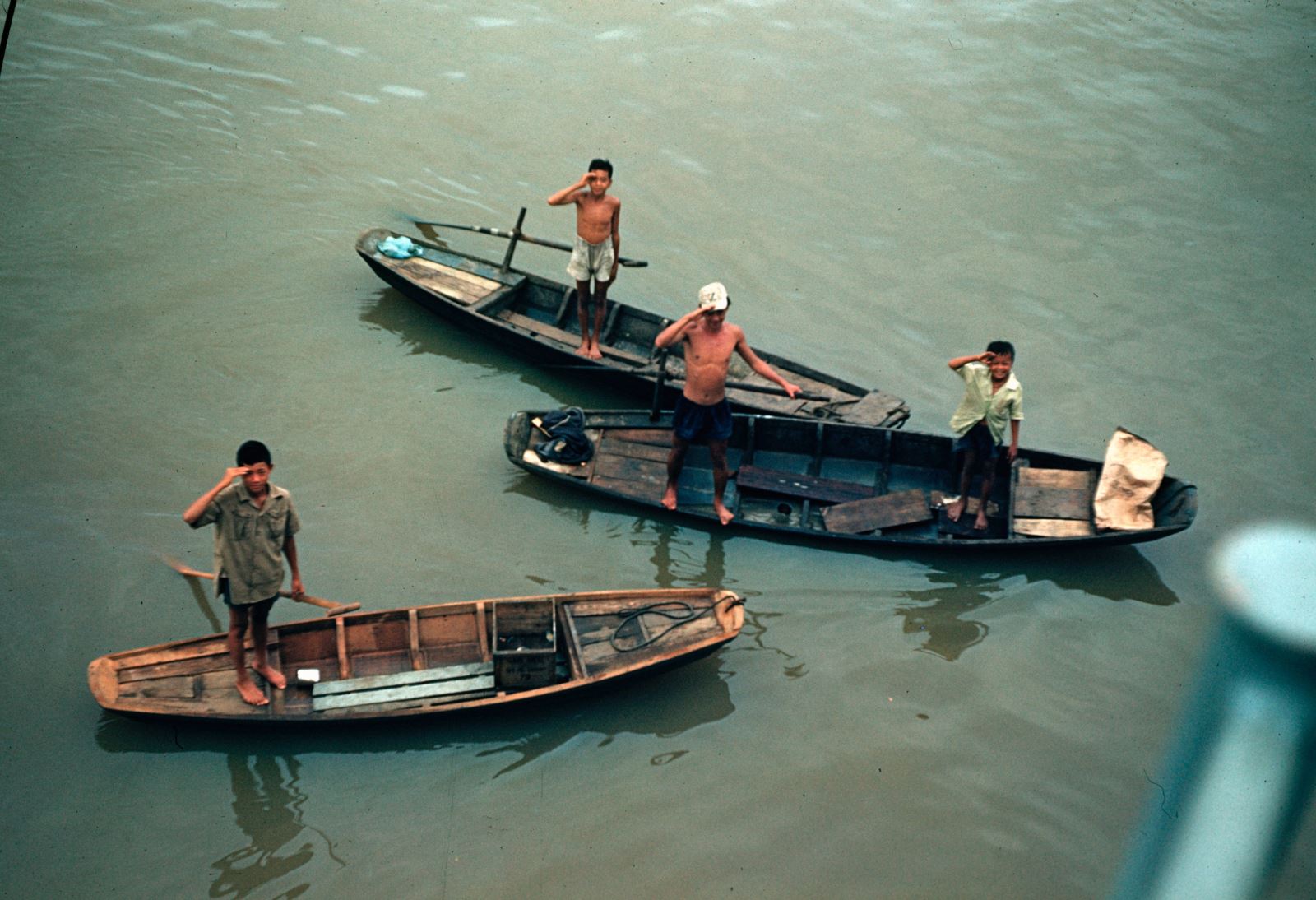
Vietnamese youth in small boats greeted Jack Neuzil’s ship with salutes as it arrived in Saigon with refugees from North Vietnam during Operation Passage to Freedom (Jack Neuzil photo).
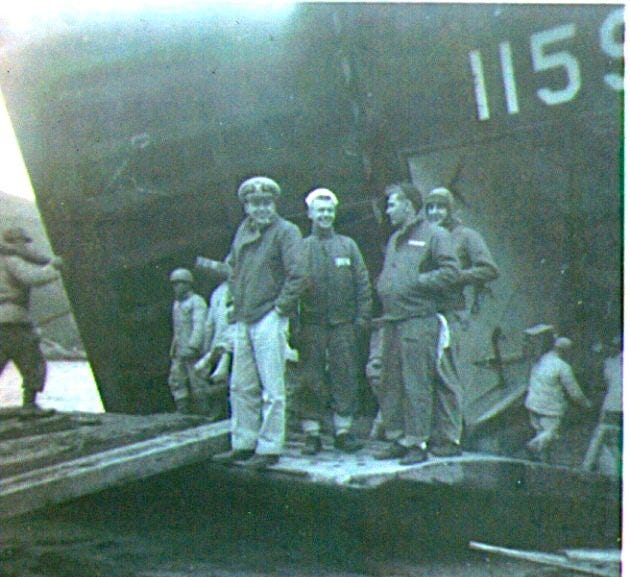
Jack Neuzil, in Navy officer’s dress, and some of his crew are shown here on a dock next to their ship, the USS Tom Green County, LST 1159. (Jack Neuzil photo)
According to historic accounts from sources such as the Vietnam Heritage Museum, the Americans transported more than 300,000 Vietnamese during Operation Passage to Freedom. French and other naval forces may have transported an additional 500,000. It was an operation a later generation of sailors would repeat in April 1975 with Operation Frequent Wind, evacuating refugees from South Vietnam after it and Saigon finally fell to North Vietnam at the end of what Americans know as the Vietnam War.
The experience of serving in Operation Passage to Freedom was one milestone in the long and productive lives of both Eddie Cahill and Jack Neuzil.
Neuzil was a career educator, having taught at Eldora, vocational classes at the Iowa Men’s Reformatory in Anamosa and 25 years heading the department of trade and industrial education at Kirkwood Community College in Cedar Rapids. He also carved wooden dinosaurs as part of a learn-to-read program in eastern Iowa schools and became known as “The Dinosaur Man.” He carved many dinosaurs for students at the Iowa Braille & Sight Saving School in Vinton. Before being discharged from the Navy in 1957 his ship also would participate in the evacuation of Chinese Nationalists from the communist mainland to the island of Taiwan during a crisis in 1955.
Eddie Cahill worked 35 years at Northwestern Bell in Waterloo, retiring in 1990. He enjoyed working with hands and restoring tractors and cars — an interest he shared with his late cousin and fellow veteran W. Louis Beecher, a prominent longtime Waterloo attorney who was in the U.S. Army Air Force in World War II, flying C-47 supply planes over the Himalayas into China.
He and Jack Neuzil may have passed from this world, but their historic role in Operation Passage to Freedom will not pass from memory thanks to the recorded oral history accounts they left behind.
Their role was to show humanity in the face of terror —in Eddie Cahill’s words, “just being a good person,”
As they would say, they were just doing their jobs.